
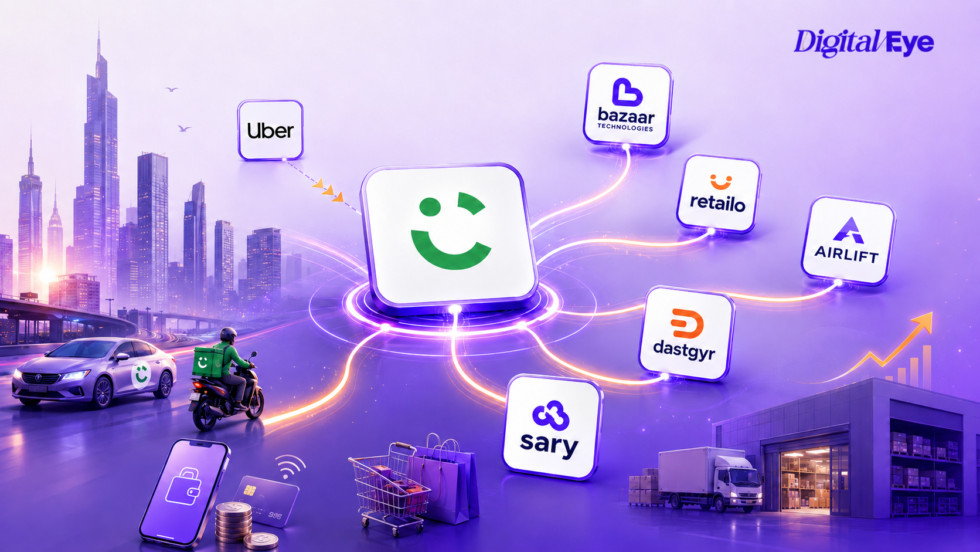
Careem Mafia Pakistan produced a new generation of startup founders after Uber acquired Careem for $3.1B, shaping Pakistan’s B2B, fintech, logistics, and commerce ecosystem.
Uber’s acquisition of Careem for $3.1 billion in March 2019 was the largest technology exit the Middle East and North Africa had ever produced. The deal generated liquidity for hundreds of employees who had spent years building Careem from a scrappy ride-hailing operation in the Gulf into a regional super app serving 15 countries from Morocco to Pakistan. What followed has been compared, not without justification, to what happened after PayPal’s 2002 acquisition. A cohort of trained operators walked out of one company and started building the next generation.
In Pakistan, the Careem alumni network, known widely as the Careem Mafia, seeded a wave of B2B commerce, healthtech, logistics, and fintech startups that collectively raised hundreds of millions of dollars in venture capital. Not all of them survived the macroeconomic pressures that hit Pakistan particularly hard between 2022 and 2024, and the ones that did emerge from those years are more operationally grounded than most. Together they represent something Pakistan’s technology ecosystem had not previously had, a dense and interconnected network of operators who had already built and scaled businesses under genuinely difficult conditions, inside a company that ended with a $3.1 billion sale.
Here are the founders at the centre of it.
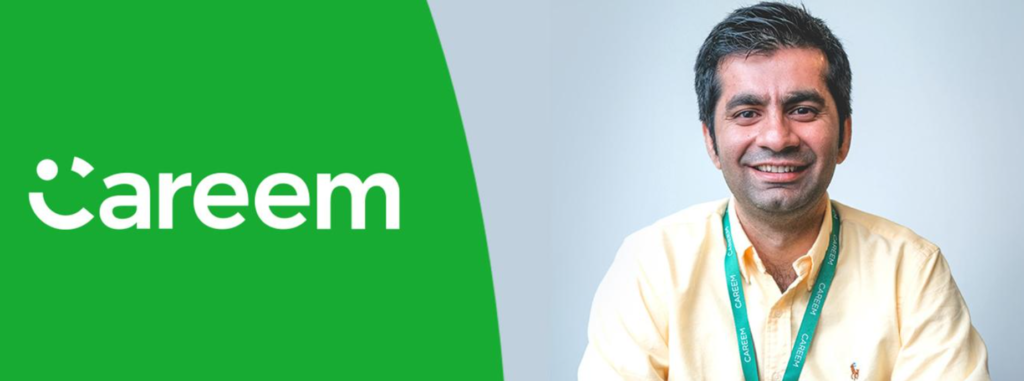
Mudassir Sheikha, Co-Founder and CEO, Careem
Mudassir Sheikha is a Pakistani founder of Memon origin who co-founded Careem in 2012 alongside McKinsey colleague Magnus Olsson, with an initial investment of $100,000 split between them. Over the following seven years, the two built a ride-hailing and super app platform serving 100 cities across 15 countries, before Uber’s acquisition made Careem the definitive proof point that a technology company built for this region could reach a global exit threshold.
Sheikha did not retire. He remained CEO through the transition, and in April 2023, when UAE telecom giant e& acquired a 50 per cent majority stake in the Careem super app for $400 million while Uber retained the ride-hailing business, he continued leading its evolution as a payments, food, and lifestyle platform. In July 2025, Careem exited Pakistan’s ride-hailing market entirely after nine years, citing macroeconomic pressures and intensifying competition.
The super app side of the business, covering payments, deliveries, and digital services, continues to operate. Sheikha donated $2 million to LUMS’s Syed Babar Ali School of Science and Engineering in 2022 to establish a scholarship for high-performing undergraduate students. As the architect of what became the Careem Mafia, his presence in the region matters not just symbolically. Every early-stage founder in Pakistan or the Gulf who pitches to a Careem alumnus investor is, in a meaningful sense, pitching to the network he built.
Saad Jangda, Co-Founder, Bazaar Technologies
Saad Jangda was a founding member of Careem Now, Careem’s food delivery arm, where he developed a ground-level understanding of how to operate last-mile logistics and supplier relationships across Pakistan’s informal commercial infrastructure. He left to co-found Bazaar Technologies in 2020 with Hamza Jawaid, a former McKinsey consultant, targeting a larger and harder problem, the digitisation of Pakistan’s five-million-plus traditional retail stores.
Bazaar builds software and supply chain infrastructure that lets corner shops, pharmacies, and small retailers order inventory digitally, manage stock, access credit, and reach consumers online. The company raised $108 million across four rounds, with Tiger Global and Dragoneer co-leading a $70 million Series B in March 2022. That round was one of the largest ever raised by a Pakistani startup and marked the peak of the global venture cycle’s attention on South Asian e-commerce.
The years that followed required a hard pivot toward unit economics and profitability. Bazaar responded by tightening its model and making its most consequential move in years, the acquisition of Keenu, a digital payments platform, in July 2025, integrating fintech infrastructure directly into its commerce stack. With 2,000 employees and a deliberate focus on sustainable margins, Bazaar is one of the better-capitalised and more battle-tested companies to have emerged from Pakistan’s last startup cycle.
Talha Ansari, Muhammad Nowkhaiz, and Wahaj Ahmed, Co-Founders, Retailo
Talha Ansari, Muhammad Nowkhaiz, and Wahaj Ahmed all worked at Careem before co-founding Retailo in 2020, targeting the same B2B retail digitisation opportunity that Bazaar had identified. Ansari had been directly involved in Careem’s $3.1 billion acquisition by Uber, and separately in Foodpanda’s $350 million acquisition by Delivery Hero, giving him a more granular view of large-scale exit processes than almost anyone else in Pakistan’s founding cohort.
Retailo built a cross-border marketplace from the start, serving retailers in Pakistan and Saudi Arabia simultaneously and using the two markets as a natural hedge against each country’s separate macroeconomic cycles. The company has raised $53 million across five rounds, including a $36 million Series A led by Silicon Valley’s Graphene Ventures, an early backer of Snapchat and Lyft, with its most recent round closing in November 2023. What distinguishes the Retailo story is the degree of cross-border ambition baked into the model from day one.
Where many Pakistani startups have treated regional expansion as a future option, Retailo treated it as a founding condition, and the Careem training that made that possible was the same training that built Careem’s own multi-country operations.
Usman Gul and Ahmed Ayub, Co-Founders, Airlift
Usman Gul and Ahmed Ayub left Careem to co-found Airlift in 2019, initially building app-based mass transit services in Pakistan’s major cities. When the pandemic made mass transit unviable, the founding team pivoted to rapid grocery delivery, a model that attracted aggressive venture capital at a moment when every major market was funding quick commerce. Airlift raised $110 million in total, the most ever raised by a Pakistani venture-backed startup at the time and a source of considerable national pride at a time when Pakistan’s tech sector was looking for proof of concept.
The company shut down in July 2022, a product of the same confluence of pressures that ended dozens of quick commerce startups globally. Unit economics that had made sense only in a zero-interest-rate environment collapsed when capital dried up, investor appetite for profitability tightened suddenly, and Pakistan’s macroeconomic deterioration made the operating environment harsher than the model could absorb. Ahmed Ayub was characteristically direct in the aftermath. “There is no such thing as failure,” he said. “Only wins and lessons.” Airlift is part of the Careem alumni story not because it succeeded but because it demonstrated the scale of ambition the network produced, and because the operators who ran it are still building, just with different hypotheses.
What This Means for Pakistan
The Careem Mafia is unusual among its regional equivalents for the density of the network it concentrated in a single country. Bazaar and Retailo are both Careem alumni ventures and, more strikingly, direct competitors, building almost identical B2B commerce infrastructure for the same Pakistani retail base. Dastgyr and Sary, two other companies operating in the same category, were also founded by former Careem operators. The network produced not one winning idea but a generation of operators confident enough to compete against each other using the same playbook.
Pakistan’s technology ecosystem had been waiting for a catalyst since the early 2010s. Careem’s acquisition delivered one, not just through the capital it generated for alumni to reinvest but through the operational credibility it conferred. The founders of Bazaar, Retailo, Airlift, and the dozen other ventures that came out of the network had, in a fairly literal sense, helped build a technology company that the world’s largest ride-hailing firm paid $3.1 billion to acquire. When a company changes hands, the experience its builders accumulated does not disappear with it. That knowledge walks out the door and continues to compound in every company those operators touch next.