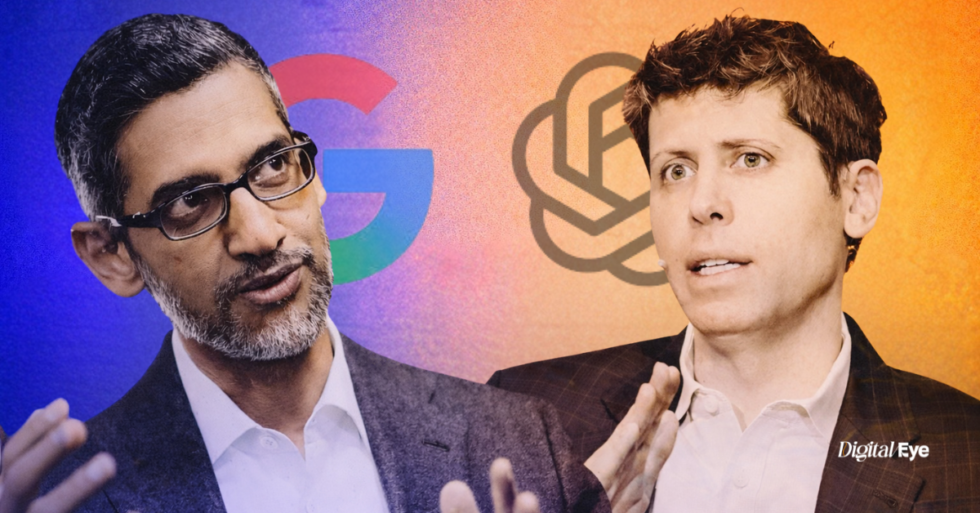
For two years, the AI narrative was written in stone: OpenAI was the agile disruptor, and Google was the incumbent “sleeping giant” too paralyzed by its own success to move.
But as we move through 2026, the script has flipped.
Recent reports, including an analysis by the Wall Street Journal, reveal that OpenAI has declared an internal “Code Red.” Their leadership is reportedly scrambling to address a reality they didn’t see coming: Google didn’t just catch up, it began to leverage a level of vertical integration and distribution that a standalone AI company simply cannot match.
The clearest signal of this shift isn’t just a chatbot; it’s the release of specialized, modular models.
The OpenAI “Code Red”: The Struggle of the Tenant
OpenAI’s current urgency stems from three structural hurdles that “first-mover advantage” can no longer hide:
- The “Tenant Tax”: OpenAI is a tenant in Microsoft’s house. Every time they train or serve a model, they pay “rent” for compute. Google, conversely, is the landlord. They own the land, the power grid, and the chips (Trillium TPUs). This allows Google to bundle AI into Workspace for free, while OpenAI must maintain high subscription fees just to keep the lights on.
- Product vs. Ecosystem: OpenAI is an app; Google is an ecosystem. To use ChatGPT, you have to make a conscious choice. You open a new tab, download an app, or pay for a separate subscription. It requires “effort” from the user to start a session. Gemini is already where you work. It’s a button in your Gmail, a sidebar in your Google Docs, and the default assistant on your Android phone.
- The Data Advantage: Because OpenAI does not own a search engine or a social platform, they are running out of new “human” data to learn from. To keep growing, they have to rely on Synthetic Data (AI-generated text), which can sometimes lead to lower quality or “robotic” answers over time. On the contrary, Google has a massive library of private, real-world data that no one else can touch. They have billions of hours of YouTube transcripts, real-time traffic patterns from Maps, and trillions of Search queries that show exactly how people ask questions.
The New Playbook: Ecosystem Dominance
While the world was focused on the “Chatbot Wars,” Google was quietly building a “Capability Layer” across its entire stack.
By injecting Gemini 3 directly into the operating system level of billions of devices, Google has turned AI into “frictionless oxygen.” They aren’t asking users to adopt a new tool; they are upgrading the tools users already live in.
Google’s Structural Reaping:
- Compute Sovereignty: By owning the silicon (TPUs), Google can offer world-class AI at a marginal cost that OpenAI, burdened by $12B+ quarterly losses, simply cannot match.
- Privacy by Design: Google can offer “On-Prem” or “VPC-only” AI through Google Cloud, providing a security guarantee that third-party API providers struggle to replicate for regulated industries.
- Multimodal Edge: Google’s Nano models are now running natively on mobile hardware, conquering the “Offline AI” frontier where cloud-heavy competitors cannot follow.
The OpenAI Counter-Attack: The Reasoning War
OpenAI isn’t sitting still. Their “Code Red” has birthed a new strategy: if they can’t win on Convenience (Distribution), they will win on Depth (Intelligence).
Through Project Orion and the o1/o3 series, OpenAI is betting on “System 2 Thinking”, models that don’t just predict the next word but “reason” through complex physics, law, and engineering problems. Their plan is to become so transitionally “smart” that the Google bundle feels like a toy in comparison.
Furthermore, they are breaking their “tenant” status through Project Stargate, a $100B–$500B supercomputer initiative. By building their own “AI Super factories” with dedicated nuclear power sources, they aim to create a level of compute density that outmuscles even Google’s current infrastructure.
The 2026 Verdict: Asset vs. Utility
We are witnessing the bifurcation of the AI market:
- Google is winning the Integration War. They are making AI as invisible and essential as a dial tone.
- OpenAI is fighting the Reasoning War. They are trying to build the world’s first “Artificial Super-Expert.”
The bottom line: Google has moved from sleeping to sprinting, reaping the benefits of Compute, Context, and Convenience. OpenAI gave us the spark, but Google is building the power grid. For the modern enterprise, the choice is becoming clear: do you want a chatbot to talk to, or an ecosystem to build on?