



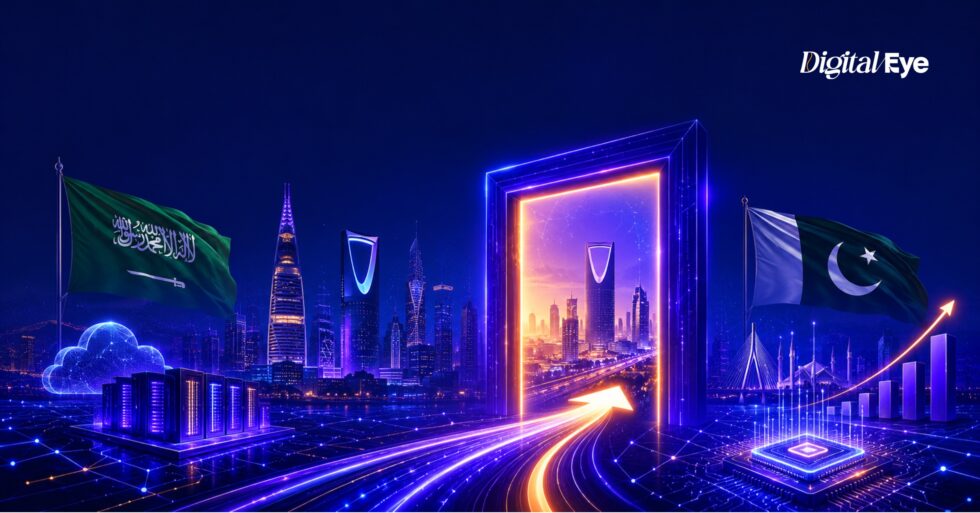
Saudi Arabia’s technology market is growing faster than almost anywhere else on earth. The Kingdom’s ICT sector was valued at $59.97 billion in 2025 and is projected to reach $101.3 billion by 2031. AI spending alone is on track to hit $800 million in 2025 and $2.1 billion by 2027. A $4.26 billion wave of data center investment is underway. The digital economy already contributes 15 percent of national GDP and is the centrepiece of Vision 2030, Crown Prince Mohammed bin Salman’s programme to diversify Saudi Arabia away from oil dependency.
The demand is real. The gap is bigger. Saudi Arabia is projected to face a shortage of 663,000 skilled workers by 2030, with a 20 percent shortfall already visible between tech job vacancies and qualified local candidates. AI engineers, cloud architects, data analysts, and cybersecurity specialists are critically short. The Kingdom is actively recruiting internationally, offering a Premium Residency Programme that allows foreign professionals to live and work without a local sponsor.
For Pakistani tech firms, this is not a hypothetical future opportunity. It is a market already in motion, with familiar cultural context, geographic proximity, an existing Pakistani diaspora of approximately 2.5 million people, and a growing set of bilateral frameworks that are lowering the barriers to entry. Several Pakistani companies are already there. More are on their way.
What Saudi Arabia Is Actually Building
The scale of Vision 2030’s technology programme is difficult to overstate. Tonomus, the tech and digital subsidiary of NEOM, is building the AI and data infrastructure layer for one of the world’s most ambitious smart city projects. Qiddiya, the entertainment and sports city, requires digital operations infrastructure across ticketing, access management, payments, and visitor analytics. The Red Sea Project needs hospitality technology at a scale that has no precedent in the region.
These are not IT procurement exercises. They are greenfield digital builds with no legacy systems to protect, a mandate to deploy best-available technology, and timelines that create sustained demand for years. The Saudi government has also reversed a previous restriction and now allows foreign companies to participate directly in government technology projects, removing one of the structural barriers that had made Saudi market entry more complex.
At the enterprise level, Saudi corporates across banking, retail, logistics, and healthcare are under active pressure to digitise. The Ministry of Communications and Information Technology has set targets for cloud adoption, AI integration, and digital service delivery that require external technology partners to execute alongside domestic Saudi teams.
Pakistani Firms Already Operating in the Kingdom
Several Pakistani technology companies have already established presence in Saudi Arabia, providing a reference map for others considering entry.
CodeNinja operates from Al Faisaliah Center in Riyadh with a proposition built specifically around Saudi Arabia’s digital sovereignty priorities. Its Sovereign AI model transfers model weights, training data, and application infrastructure permanently to the client at engagement end, creating no ongoing vendor dependency. Recognised on Clutch’s 100 fastest-growing technology companies of 2026, CodeNinja serves 240-plus organisations across 15-plus industries worldwide.
Systems Limited is Pakistan’s largest publicly listed IT company and has maintained Saudi Arabia as one of its active operating markets. With a track record spanning enterprise software implementation, digital transformation, and managed services, Systems Limited has the scale and domain portfolio to compete for Vision 2030 contracts across multiple sectors.
Arbisoft opened a dedicated Riyadh office in April 2025 as part of a deliberate MENA expansion strategy. The move reflects a calculated assessment that Saudi Arabia is moving from a market of occasional project work to a sustained delivery environment where local presence is a prerequisite for meaningful contract access.
MedIQ entered the Saudi healthcare market in 2023 and subsequently raised its $6 million Series A from Gulf investors including Joa Capital, a Saudi-based fund. The capital structure mirrors the entry strategy: raise from the market you want to own. MedIQ’s AI-powered clinical and operational platform is positioned for a healthcare sector under significant modernisation pressure.
Haball is deploying its Shariah-compliant B2B supply chain financing platform into Saudi Arabia as its primary GCC expansion market. Saudi Arabia’s SME sector is large, underfunded relative to its size, and actively seeking Islamic finance alternatives to conventional banking. Haball’s model, validated against Pakistan’s complex B2B payments environment, transfers directly.
Beyond these company-level moves, two government-level frameworks have formalised the bilateral technology relationship. The Pakistan-Saudi AI Hub, announced in 2025 and supported by the Ministry of IT under Minister Shaza Fatima Khawaja, is a matchmaking platform connecting Pakistani software houses and freelancers with Saudi enterprises seeking digital services. GO Telecom, a major Saudi cloud and data services provider, launched an AI hub in Islamabad as its first major technology venture in Pakistan, creating a direct channel between Saudi demand and Pakistani supply. In February 2026, the Pakistan Regional Economic Forum and Saudi Bridge signed a memorandum of understanding to establish a bilateral investment platform targeting $500 million in joint venture projects.
The Five Doors That Are Open
Not every Pakistani tech firm is positioned for the Saudi market equally. The opportunity is real but specific. Five categories represent the most accessible and highest-value entry points.
Sovereign AI and cloud services are the most acute shortage. Saudi enterprises are under mandate to deploy AI and migrate to cloud, but increasingly they want AI they own permanently, not AI they licence from a vendor whose terms can change. CodeNinja’s Sovereign AI positioning directly addresses this: model weights, training data, and application infrastructure that transfer to the client at engagement end. Saudi Arabia’s emphasis on digital sovereignty makes this framing commercially potent in ways that generic AI services positioning is not. The Pakistan-Saudi AI Hub provides a structured channel for firms entering this category.
Enterprise software implementation and digital transformation is where firms like Systems Limited have existing credibility. SAP, Oracle, Salesforce, and other enterprise platforms are being deployed at scale across Saudi corporates and government entities. Pakistani firms with certified implementation expertise and deep Arabic-language and Islamic business process knowledge have an advantage over generic global IT outsourcing providers.
Healthtech is an open category. Saudi Arabia’s healthcare sector is expanding rapidly, with Vision 2030 targeting significant improvements in patient outcomes and digital health delivery. MedIQ’s entry has established that Pakistani healthtech products and platforms are commercially viable in this market. The sector remains underserved relative to its scale.
Islamic finance and B2B fintech is a niche where Pakistani expertise is genuinely differentiated. The Kingdom’s Islamic finance sector is large and growing, with demand for Shariah-compliant products across payments, lending, and supply chain financing. Haball’s entry is the most visible current example, but the addressable market extends well beyond one company.
Cybersecurity is a critical and underpublicised gap. Saudi Arabia’s rapid digitisation across government and critical infrastructure has created cybersecurity exposure that demand has outpaced. Pakistani cybersecurity firms with government-grade certifications and regional deployment experience are well positioned for this, provided they can navigate the procurement relationships that dominate the sector.
What Pakistani Firms Need to Get Right
Opportunity in Saudi Arabia does not come without requirements. Three areas consistently determine whether Pakistani technology firms succeed in the market or stall at the threshold.
Local presence is increasingly non-negotiable for sustained contract access. Saudi enterprises and government entities favour suppliers with a regional office, local relationship management, and demonstrated commitment to the market. Arbisoft’s Riyadh office investment reflects this reality. Remote-first engagement models that work in the UK and US market do not translate to the same degree in the Kingdom.
Saudization compliance is a structural requirement. The Nitaqat programme mandates minimum percentages of Saudi national employment across company tiers. Pakistani technology firms entering Saudi Arabia need to build this into their operating model from the start, not treat it as a constraint to manage around. Firms that build genuine Saudization strategies, including training and career development for Saudi nationals, create a competitive advantage over those who treat it as a box-ticking exercise.
Relationship-led business development is the dominant procurement model. Saudi enterprise and government contracts are typically preceded by sustained relationship investment, not cold pipeline conversion. Pakistani technology firms that understand this and invest in senior-level relationship development in the Kingdom over a multi-year horizon will access contract opportunities that firms relying on digital outreach and RFP responses alone will not reach.
What This Means
Saudi Arabia is the most significant near-abroad technology market Pakistan has ever had access to, at the most advantageous moment. The bilateral frameworks are in place. The initial Pakistani company presence is established. The demand signal from Vision 2030 is structural, not cyclical.
The Pakistani technology firms that move now with the right model, local presence, Saudization-ready operations, and relationship-led business development, are positioning for a decade of sustained engagement in a market that will only grow. Those waiting for the opportunity to become more obvious may find the entry points have been claimed.

