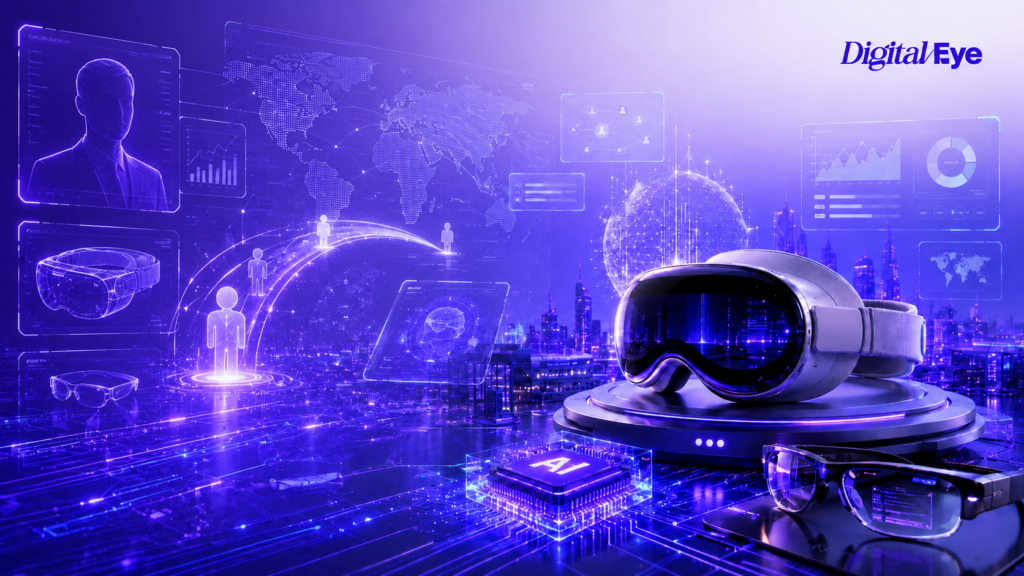
Paul Meade, the Apple VP who built Vision Pro and spearheaded Apple’s smart glasses program, is joining OpenAI’s hardware unit as the AI race moves into physical devices.
OpenAI Recruits Apple’s Vision Pro Chief to Lead Its Push Into AI Hardware
OpenAI has hired one of Apple’s most senior hardware executives, adding the vice president who oversaw both the Vision Pro spatial computer and the company’s AI-powered smart glasses program to its team. The hire signals that OpenAI’s ambitions to build AI-native consumer devices are accelerating from concept to execution.
Paul Meade spent years at Apple leading the hardware engineering teams behind two of the company’s most experimental product lines. He is expected to start at OpenAI’s hardware unit shortly after departing Apple, according to reporting by Bloomberg and TechCrunch. At OpenAI, he will work on a family of AI-powered devices the company has been developing in relative secrecy.
Why Meade Is Available
Apple’s own executive bench has been in flux since the announcement that longtime CEO Tim Cook will hand leadership to hardware chief John Ternus. Ternus’s reshuffle of Apple’s engineering divisions repositioned several vice presidents into roles they viewed as lateral moves rather than promotions, multiple sources told Bloomberg. Meade was among those who concluded his path forward at Apple had narrowed.
The timing is not coincidental. Apple has shelved a major Vision Pro hardware overhaul to refocus engineering resources on AI-powered glasses, a product category Apple expects to ship in 2027. With the near-term roadmap set, the project Meade led is effectively complete, leaving him with fewer options inside the company.
What OpenAI Is Building
OpenAI has described a vision where AI agents handle tasks that today require navigating smartphone apps, and where a physical device purpose-built for AI interaction replaces the conventional phone as the primary computing interface. Sam Altman has discussed the idea publicly, and the company hired former Apple chief design officer Jony Ive and his firm io to lead design work on the hardware.
Recruiting Meade adds manufacturing and systems integration depth to that effort. Apple’s hardware supply chain expertise, including the ability to coordinate with contract manufacturers, component suppliers, and logistics partners at consumer scale, is exactly what a first-time hardware maker like OpenAI needs to move from prototype to mass market.
The Bigger Pattern
The departure adds to a string of high-profile exits from major technology companies to AI-native challengers. AI research talent has been moving between labs for months. What is newer is the movement of hardware and product engineering talent, suggesting that the next phase of the AI race will be decided not just in model performance benchmarks but in the physical devices that consumers hold in their hands.
For enterprise buyers evaluating AI tools, the emergence of a credible AI-native device ecosystem, one built around agents rather than apps, is worth monitoring. The productivity implications of always-on AI interfaces for knowledge workers are significant, and companies that wait to assess the category risk a steeper adoption curve.
What This Means
OpenAI’s ability to recruit from Apple’s most senior hardware ranks is a market signal, not just a personnel note. It means the company has the credibility, resources, and clarity of direction to attract talent that could easily secure a senior role at any other major tech firm. If OpenAI ships a compelling AI device in the next 18 months, the enterprise software and productivity tools market will face the same disruption that happened when the iPhone displaced enterprise BlackBerry deployments. The race for the AI-era interface has begun.