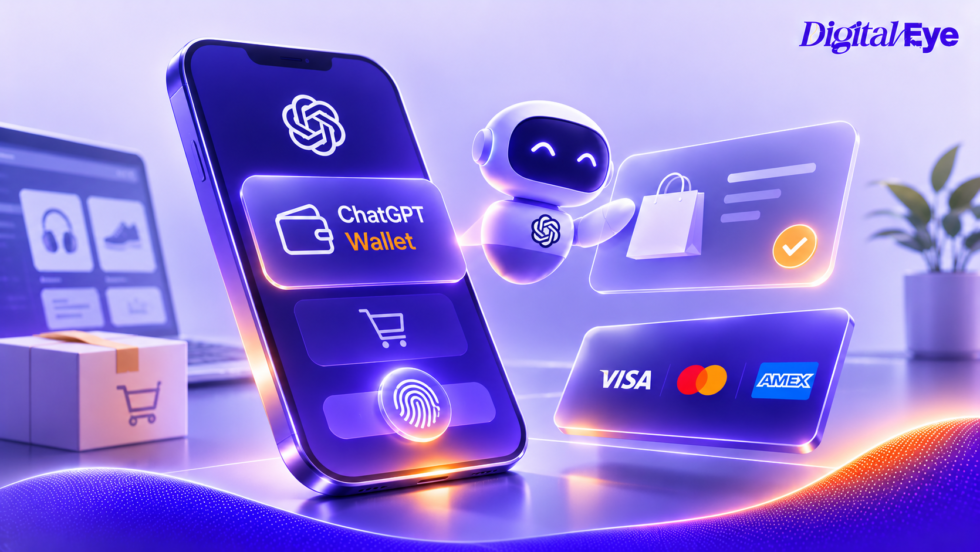
OpenAI launched ChatGPT Wallet on November 13, 2026, (press release) introducing a payment feature that lets AI agents complete purchases after receiving authorization from a user. The wallet is rolling out through dots, OpenAI’s personal agents, initially for eligible ChatGPT Pro subscribers in the United States.
The system is designed to keep actual card information away from the agent and the merchant during checkout. Instead of handing over card details, a user reviews the proposed purchase and approves it with a security check. Payment networks then generate substitute credentials for the transaction.
How ChatGPT Wallet Works
A customer adds an eligible payment card to the wallet once. When an agent is ready to buy something, the user sees the merchant, items, total price and selected card before deciding whether to authorize the payment. Approval requires a biometric check, such as Face ID or Touch ID, on a supported device.
After authorization, the relevant card network creates a payment token containing substitute card details that can be used in the merchant’s existing checkout process. OpenAI says the underlying card information is not shared with either the agent or business. The transaction remains between the customer and merchant.
Users retain the rewards on their eligible cards and protections for qualifying disputes. OpenAI also says each approved purchase creates a record of what the customer authorized. Crucially, approving a payment does not by itself guarantee that an order has been completed. Customers should still check the merchant’s confirmation.
Who Can Use the New AI Payment Feature?
ChatGPT Wallet is being introduced gradually to ChatGPT Pro subscribers aged 18 or older who live in the United States and have an eligible U.S.-issued card with a U.S. billing address. Availability can vary even among people who meet those requirements, because access is not being activated for everyone at once.
According to OpenAI’s wallet setup guidance, the feature currently operates in conversations with a dot, rather than ordinary ChatGPT chats, ChatGPT Work or standalone Codex threads. Users can ask a dot to help them shop or book accommodation and use Wallet when checkout is needed.
OpenAI announced the initiative with American Express, Mastercard and Visa. The company has not specified when the feature will expand to other countries or subscription tiers. It also has not announced that agents can independently make unlimited purchases without direct approval.
Why AI Agent Payments Matter for Online Businesses
Agentic shopping introduces challenges for ecommerce websites that were built around human visitors. Automated browsers may encounter security controls, while payment fraud systems can interpret unfamiliar checkout behavior as suspicious even when a customer has approved the purchase.
In its official ChatGPT Wallet announcement, OpenAI said merchants can support these transactions through existing checkout flows. It advises businesses to make product information accurate, allow properly authenticated agent traffic and work with payment providers to prevent legitimate purchases from being declined.
The company is also working with fraud prevention providers and payment platforms to help distinguish authorized agent transactions from potentially risky activity. For merchants, reliable integration may depend less on adding a new payment button than on ensuring browsing, risk assessment and order confirmation work when software acts for a customer.
What ChatGPT Wallet Does Not Yet Allow
The initial feature still requires the user to review and approve each payment. OpenAI has discussed future capabilities that could allow customers to preauthorize certain purchases within limits for spending, categories or time periods, subject to additional safeguards. Those options are not part of the current general rollout.
There are also practical limits outside OpenAI’s direct control. A retailer may block agent access, a transaction may fail risk screening, or a selected payment card may not qualify. The wallet’s launch therefore should not be treated as proof that agents can purchase from every online store.
What Happens Next
The early release gives OpenAI, banks, card networks and merchants an opportunity to evaluate how AI-initiated payments perform in real checkout environments. Key questions include transaction reliability, customer consent, fraud detection and what happens when a purchase needs to be returned or disputed.
For consumers, the immediate change is a new route from researching products to authorizing a transaction without exposing primary card details to the agent. For businesses, ChatGPT Wallet signals a growing need to design websites and payment systems for verified software agents as well as human shoppers.