
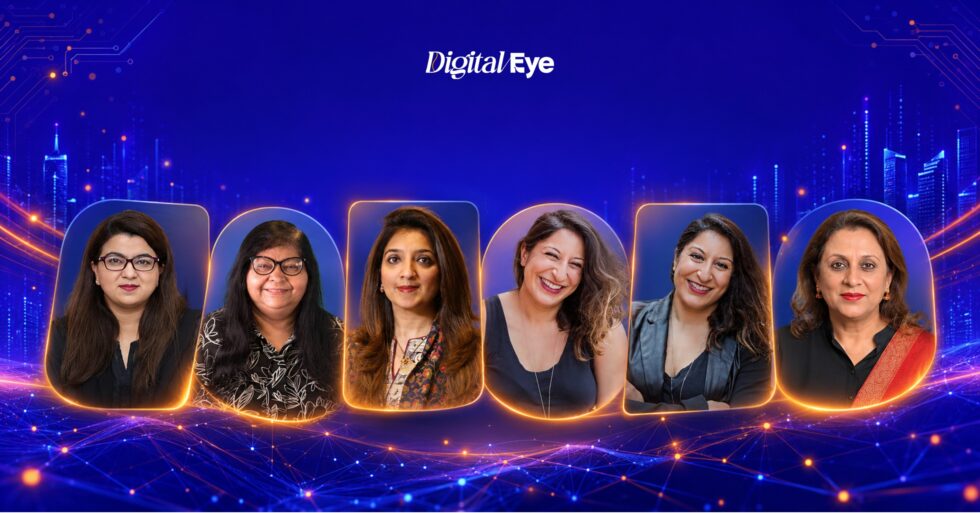
Women hold a fraction of the visible leadership positions in Pakistan’s technology sector relative to their presence in its talent base. The gap is structural, documented, and closing — slowly. Female-founded and co-founded startups accounted for 31 percent of disclosed funding deals in 2025, up from 13 percent the year before. That shift is not accidental. It reflects, in part, the work of the women on this list.
A note on selection: The names below were selected based on three criteria: verifiable track record of building, leading, or funding technology companies or major tech functions; active contribution to Pakistan’s tech ecosystem in 2025 and 2026; and breadth of representation across domains — founders, investors, corporate executives, and policy leaders. This is not a comprehensive ranking. It is an evidence-based starting point.
1. Shaza Fatima Khawaja — Federal Minister for IT and Telecommunication
As Pakistan’s Minister for IT and Telecom since March 2024, Shaza Fatima Khawaja holds the most consequential tech policy role in the country. Under her tenure, the Ministry has negotiated the Pakistan-Saudi AI Hub partnership, overseen the Virtual Assets Act 2026, pushed for a digital retail banking framework, and represented Pakistan in bilateral digital cooperation agreements with Saudi Arabia, the UAE, and other technology partners. She was featured in the Women in GovTech 2025 report for leadership in inclusive, citizen-focused digital governance. A LUMS political science faculty member before entering full-time politics, she brings analytical rigour to a portfolio that shapes the regulatory environment every Pakistani tech company operates within.
2. Senator Sadia Abbasi — Chair, Senate Standing Committee on IT and Telecom
Senator Sadia Abbasi chairs the Senate Standing Committee on IT and Telecom, the legislative body that scrutinises every major technology regulation, telecom policy, and digital infrastructure decision at the federal level. In 2026, her committee has driven the push to classify mobile and internet services as essential services under Pakistan’s Essential Services Act, directed the PTA to address load shedding impacts on telecom towers, and actively reviewed the E-Transactions Bill and NTC restructuring. Oversight roles rarely generate headlines. They generate outcomes. The policy environment Pakistani tech firms operate in is shaped significantly by this committee.
3. Kalsoom Lakhani — Co-founder and General Partner, i2i Ventures
Kalsoom Lakhani co-founded Invest2Innovate in 2011 as an ecosystem support organisation before co-building i2i Ventures in 2019, Pakistan’s first female-led venture capital fund. The $15 million fund, anchored by a $3 million commitment from the IFC, has backed companies including Abhi, CreditBook, Oraan, Tazah Technologies, and Truck It In. A third of i2i’s portfolio is women-led. Lakhani’s prior decade of ecosystem work gave i2i a sourcing advantage that pure capital-first VCs cannot replicate: she knew which founders were building with rigour before they were fundable.
4. Fatima Asad Khan — CEO, Abacus
Fatima Asad Khan leads Abacus, one of Pakistan’s most established technology, consulting, and outsourcing firms, a company operating since 1987 that today serves over 600 enterprise clients across five countries. She spent 24 years building institutional knowledge of the firm before being appointed CEO in 2021, having previously served as Managing Director. Under her leadership, Abacus has accelerated its positioning around digital transformation, AI, cloud, and human capital management at the enterprise level. A LUMS MBA alumna and member of the university’s Board of Trustees, she also contributes to the GSMA Asia Pacific advisory landscape. Where much of Pakistan’s tech narrative centres on startups, Khan represents the enterprise technology layer — the companies that implement technology at scale inside Pakistan’s largest organisations — and the visibility that comes with leading it as a woman.
5. Dr. Sara Saeed Khurram — Co-founder and CEO, Sehat Kahani
Dr. Sara Saeed Khurram co-founded Sehat Kahani to solve a specific and under-discussed structural problem: Pakistan has tens of thousands of qualified female doctors who are culturally prevented from working in clinical settings. Sehat Kahani turned that pool of inactive medical talent into a telemedicine network serving underserved communities. The platform has delivered millions of digital consultations, reduced the cost of primary care access, and demonstrated that Pakistan’s most constrained resource, female medical expertise, could be mobilised at scale through technology. In January 2026, Harvard T.H. Chan School of Public Health published Sehat Kahani as a case study in digital health transformation. She received the HUM Women Leaders Award in 2026 and was a Rolex Awards for Enterprise Associate Laureate in 2019.
6. Dr. Iffat Zafar Aga — Co-founder, Sehat Kahani
Dr. Iffat Zafar Aga co-founded Sehat Kahani alongside Dr. Sara Saeed Khurram, providing the clinical architecture and medical credibility that converted a promising social enterprise into a scalable health platform. The two co-founders represent a model that Pakistan’s startup ecosystem rarely produces: technical and operational co-founders who are both domain experts, with no gap between the problem they understand and the product they built. Aga’s contribution to Sehat Kahani is inseparable from the platform’s clinical integrity.
7. Fatima Rizwan — Founder, MetaSchool
Fatima Rizwan built TechJuice into Pakistan’s leading technology media platform before stepping into founder mode with MetaSchool, an online education platform that teaches blockchain and Web3 development skills to developers across South Asia. MetaSchool addresses a specific gap: the developer community building on Web3 infrastructure needed structured, accessible learning designed for their context, not repurposed content built for Western audiences. Rizwan’s media background gives MetaSchool a distribution edge that pure ed-tech operators lack, and her decade of covering Pakistan’s tech ecosystem gives her an understanding of what the market actually needs.
8. Jehan Ara — Head of Katalyst Labs, Founder of The Nest I/O
Few people in Pakistan’s tech ecosystem have operated across as many of its layers as Jehan Ara. As former President of P@SHA and founder of The Nest I/O, she built the physical infrastructure, mentorship networks, and institutional relationships that gave Pakistan’s first generation of tech founders somewhere to start. The compounding effect of that work is visible in every startup that traces its early formation to Karachi’s tech community. She now leads Katalyst Labs, extending the same model by creating structured conditions for the next cohort of founders at a moment when Pakistan’s ecosystem needs connective tissue as much as it needs capital. Ecosystem builders rarely receive the recognition of the companies they enable. The companies would not exist without them.
9. Halima Iqbal — Co-founder and CEO, Oraan
Halima Iqbal co-founded Oraan in 2018 after returning to Pakistan from a decade as an investment banker in North America and finding it took her three and a half months to open a basic bank account. That experience became a thesis: if the formal financial system fails someone like her, it fails almost everyone else too. Oraan digitised the committee, Pakistan’s deeply embedded informal savings circle, turning a mechanism already trusted by millions of women into a regulated, data-generating financial product. The platform has raised over $4.5 million, serves a user base that is 84 percent women, and operates across more than 170 cities. Oraan is not a product designed around Western financial assumptions and adapted for Pakistan. It is a product built from Pakistan’s actual financial behaviour outward, and that distinction is what gives it reach.
10. Mehwish Salman Ali — Founder and CEO, Data Vault and ZahanatAI
Mehwish Salman Ali occupies a corner of Pakistan’s tech landscape that almost no other woman in the country does: hard infrastructure and sovereign AI. She founded Data Vault, Pakistan’s first women-led solar-powered data centre, and co-founded ZahanatAI, the country’s first indigenous large language model, built explicitly to handle Pakistan’s linguistic and cultural complexity rather than inheriting assumptions from models trained on Western corpora. In 2025, a US fund committed $10 million to a startup investment initiative under her co-leadership, and she was inducted into the Forbes Technology Council as the only Pakistani female IT expert in that body. At a moment when Pakistan is actively debating digital sovereignty, data localisation, and AI infrastructure, Salman Ali is one of the few people building the physical and intellectual layer those debates are actually about.
Honourable Mentions
The ten profiles above are a cross-section, not a ceiling. The next wave of women shaping Pakistan’s technology landscape is already in motion.
Aleena Nadeem (EduFi) is a Forbes 30 Under 30 honouree and former Goldman Sachs analyst who founded Pakistan’s first student financing fintech, enabling a Study Now, Pay Later model now active across dozens of universities. Dr. Saira Siddique (MedIQ) became the first solo female founder of a Pakistani startup to raise a Series A, closing $6 million in 2025, backed by Gulf investors, with the platform now operating across Pakistan and Saudi Arabia as an AI-powered healthcare ecosystem. Maheera Ghani, a Cambridge PhD in materials science and Forbes Asia 30 Under 30 honouree for 2026, leads WinSci Pakistan, which received the Nature Inspiring Women in Science Award for its work bringing more women into scientific and technical careers.
Each of them represents a sector, a geography, and a generation that this list will need to reflect more fully in the years ahead.