
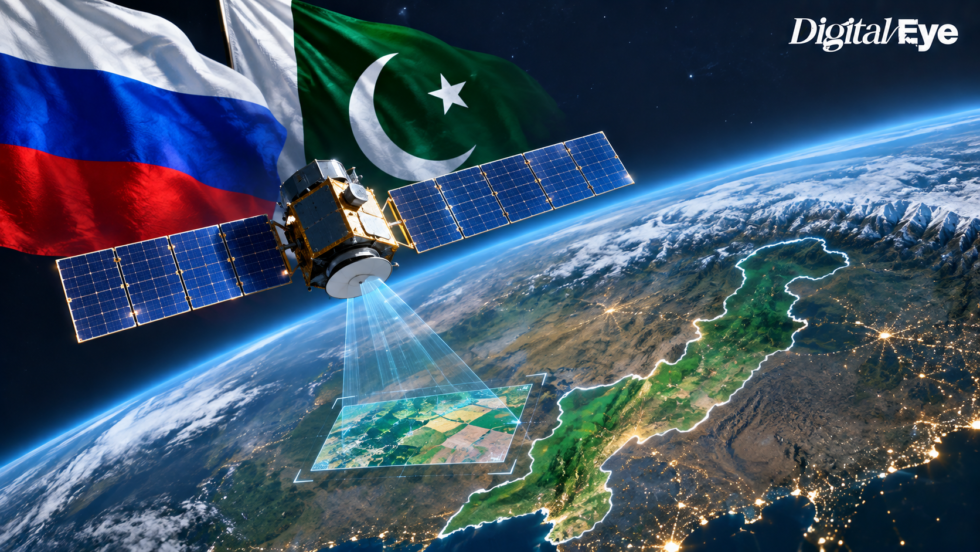
Russia Pakistan space technology discussions have advanced after Moscow offered to share expertise in Earth observation and other space capabilities. Russian Energy Minister Sergei Tsivilyov described the proposal on November 25, 2026, following a meeting of the two countries’ intergovernmental commission in Moscow. Officials said a working group had prepared draft cooperation documents that could be signed by national leaders at a future meeting. No completed technology-transfer agreement or delivered satellite system has been announced.
Russia Pakistan Space Technology Offer Focuses on Earth Observation
Tsivilyov told reporters that Russia and Pakistan share an interest in Earth remote sensing data and that Moscow is willing to share relevant technologies and experience. Earth observation normally involves satellites and related ground systems used to gather information about conditions on the planet. Such data can support monitoring of land, weather-related risks, agriculture and changes in natural resources, depending on the sensors and analytical services deployed.
The minister also referred to possible cooperation in satellite navigation, communications and human spaceflight. Those subjects represent areas of interest discussed around the intergovernmental meeting, not a finalized list of systems Russia has agreed to provide. Neither a firm delivery schedule nor a project budget was included in the public remarks.
Draft Documents Prepared for a Future Leaders’ Meeting
The comments followed the 11th meeting of the Russia-Pakistan Intergovernmental Commission for Trade, Economic, Scientific and Technical Cooperation. According to Interfax, Tsivilyov said the working group had prepared several documents concerning space development and that the sides were ready to sign them when their heads of state meet. A document ready for potential signature is not the same as a signed and implemented agreement.
The distinction is important because reports about diplomatic cooperation can blur several separate milestones: an expression of interest, technical negotiations, an agreed memorandum and an operational project. At this stage, the supported claim is that the Russian side has offered cooperation and that draft documents exist. The scope, funding and practical obligations of any future agreement remain to be confirmed.
What Earth Observation Cooperation Could Enable
For Pakistan, access to remote sensing expertise could be useful for activities that need regular observation of wide geographic areas. Satellite imagery and processed data may help researchers study agricultural patterns, flooding risks, land-use change and environmental conditions. Space-derived data can support public planning, but the quality of results depends on sensor capabilities, availability of historical records, trained analysts and how information is validated on the ground.
It is not yet clear whether future cooperation would involve data access, training, software, ground-station services, joint research or hardware. Public statements have not identified a specific Russian satellite, imagery product or Pakistani agency that would receive such support. Predictions about new satellite launches or full access to Russian space infrastructure are therefore not established by the announcement.
Pakistan’s Expanding Space Partnerships
Pakistan already pursues satellite research and lunar exploration initiatives through its national space program. International partnerships can provide additional opportunities for scientific training and technical collaboration, although each project must be assessed on its own terms. The Russian offer does not replace existing arrangements with other countries and should not be framed as evidence that Pakistan has committed to a new supplier or platform.
The discussions also took place alongside talks about broader trade, energy and economic cooperation, reflecting the wide mandate of the intergovernmental commission. Those other areas are separate from the proposed space documents. Any practical research or service arrangement would need clear technical responsibilities, access terms and oversight before results could be evaluated.
What This Means
The main development is Russia’s willingness to expand space cooperation with Pakistan, particularly in Earth observation. The next verifiable milestone would be the signing and publication of a specific cooperation instrument, followed by details of participating organizations, timelines and deliverables. Until then, the proposal is a diplomatic and technical opening rather than a completed transfer of Russian space technology.